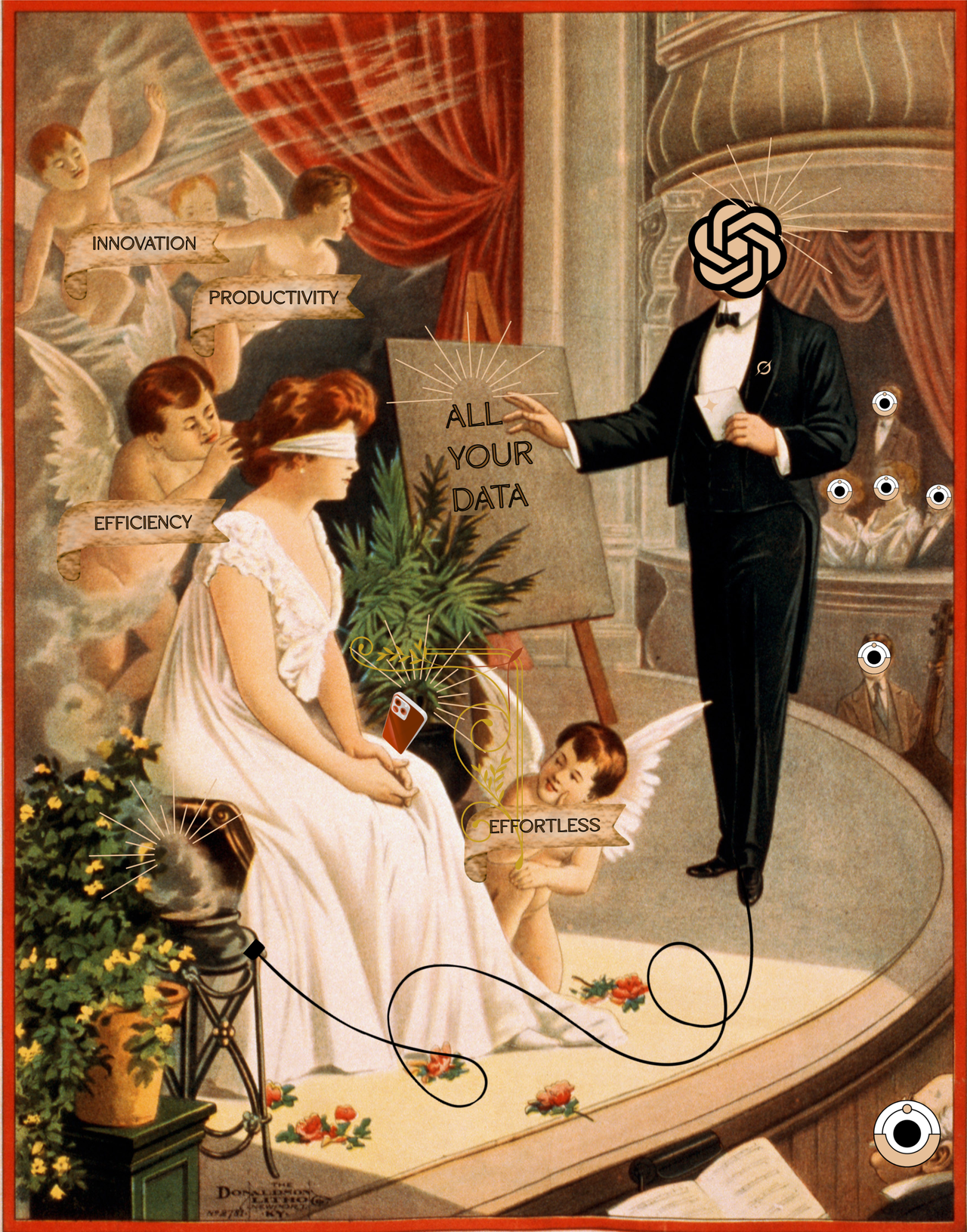
Ethical Considerations in Generative AI
On the previous page, we explored ethical frameworks and different lenses for thinking about AI. This page shifts to generative AI (GenAI), the AI that creates content such as text, images, video, code, and music. GenAI is powerful, and it also raises new challenges that deserve careful thought.
The Ethics of GenAI: Navigating the Gray Areas
As GenAI spreads, questions about data ownership, misinformation, and ethical use have become more pressing. Who controls the data GenAI is trained on? How do we weigh innovation against harm? The video below explores these dilemmas and the opportunities and risks GenAI poses.
Some Harm Considerations of Large Language Models (LLMs)
LLMs like OpenAI's ChatGPT, Google's Gemini, and Anthropic's Claude are trained on vast amounts of text to generate human-like responses. Alongside their capabilities, they raise real ethical challenges:
- Access discrimination: not everyone has equal access to these platforms, especially as they are privatized and monetized. Cost, internet access, and accessibility for users with disabilities all widen the digital divide.
- Bias and misinformation: LLMs inherit biases from their training data, sometimes reinforcing stereotypes or producing false information (AI "hallucinations").
- Cultural and epistemic bias: many LLMs are trained mostly on Western, English-language content, which can marginalize other perspectives and narrow whose knowledge counts.
- Environmental impact: training and running LLMs takes significant computing power, energy, and water. You will look at this more closely on the upcoming "AI and the Environment" page.
These challenges point to the need for transparency, accountability, and critical engagement with tools like LLMs.
When GenAI Makes Fake Content: Deepfakes
One of the clearest harms of generative AI is convincing fake images, audio, and video, often called deepfakes. Two incidents from January 2024 show what is at stake:
- Non-consensual explicit images. AI-generated explicit images of Taylor Swift spread across social media; a single post was viewed more than 45 million times before it was removed. The images appear to have been made with a consumer image tool, and the company responded by tightening its safety filters. The episode showed how easily image generators can be misused to target real people, who are overwhelmingly women and girls (Fast Company, 2024).
- Election misinformation. Days before the New Hampshire primary, thousands of voters got a robocall using an AI-cloned voice of President Biden telling them not to vote. The consultant who commissioned it faced a proposed 6 million US dollar FCC fine, and the FCC moved to make AI-voice robocalls illegal (NPR, 2024).
Deepfakes raise hard questions about consent, identity, and trust: when almost anything can be faked, how do we decide what to believe? You will practice spotting manipulated media in Module 3.
Who Owns the Training Data? The Copyright Fight
Generative AI learns from enormous amounts of text, images, and code, much of it created by people who were never asked and never paid. That has produced a wave of lawsuits that are still unresolved:
- The New York Times sued OpenAI and Microsoft (2023), arguing its articles were used to train ChatGPT without permission. In 2025 a judge let the core copyright claims move forward toward trial (NPR, 2025).
- A group of visual artists sued Stability AI, Midjourney, and DeviantArt (Andersen v. Stability AI), arguing image generators were trained on their work without consent. The case is moving through discovery (Copyright Alliance).
Courts have not settled these questions, and early rulings have gone in different directions. For now, "the AI made it" does not erase questions about where the underlying work came from, something worth remembering when you use AI to generate images, text, or code.
The Cultural Backlash Against Generative AI
As GenAI becomes more widespread, ethicists are not the only ones concerned. Many people feel AI is being pushed into places where it does not belong and often fails to live up to its promises. Writer Stephanie Kirmer (2025) describes why frustration is growing:
- AI is not delivering on its promises: it makes mistakes, "hallucinates," and often does not work as well as advertised.
- AI is being forced into products unnecessarily: many people do not want AI in every tool they use.
- Companies are losing public trust: tech firms are embedding AI everywhere, sometimes raising prices, even when users are not convinced it is worth the cost.
For example, AI features have been added to software like Microsoft 365 alongside price increases, even for users who are not interested in them. The result, critics argue, is that AI can make everyday life more complicated rather than simpler.
🔗 Read the full article: "The Cultural Backlash Against Generative AI" (Stephanie Kirmer, 2025).
Knowledge Check
Select an answer to see feedback. Each option explains why it is or is not correct.
Question 1 of 3
Which statement best explains why LLMs require careful ethical consideration?
Question 2 of 3
What is one major reason users are skeptical of AI's growing presence in digital tools?
Question 3 of 3
The AI-cloned Biden robocall and the non-consensual Taylor Swift images are both examples of which GenAI risk?